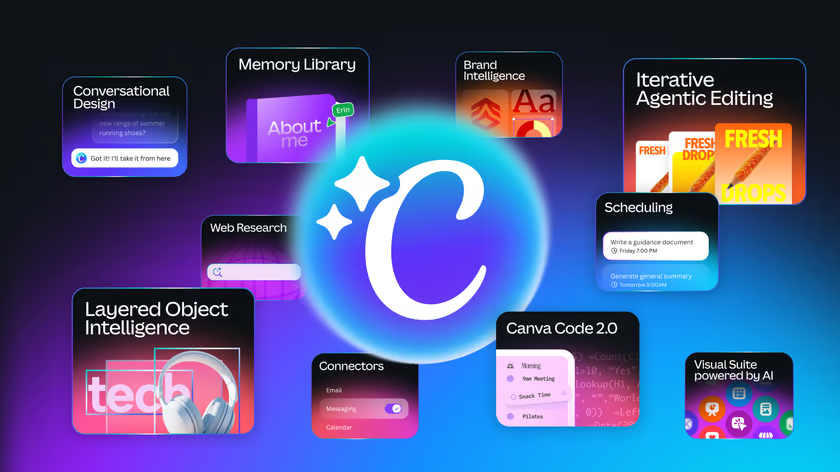
Canva and Adobe just dropped major updates powered by “agentic AI,” aiming to make creative work faster and more collaborative.
Canva’s CEO Melanie Perkins introduced Canva AI 2.0, saying it combines “Agentic Orchestration, Conversational Design and Object-based Intelligence” for users who want to unlock their creativity,
while Adobe’s new Firefly AI Assistant is all about making design tasks easier without replacing the human touch.
TL;DR:
- Canva is introducing Canva AI 2.0, its most significant product evolution since launching in 2013, transforming Canva into a conversational, agentic platform where teams can go from the spark of an idea to complete, published work in one place.
- Powered by the Canva Design Model – the world’s first foundation model built to understand the structure, hierarchy, and complexity of real-world design – Canva AI 2.0 generates fully layered, editable output from a single prompt, and gets smarter the more you use it.
- Available today as a research preview, Canva AI 2.0 introduces a new architecture layer spanning conversational design, iterative agentic editing, layered object intelligence, and living memory, alongside six new intelligent workflows: connectors, scheduling, web research, brand intelligence, Sheets AI, and Canva Code 2.0.
Canva acquires startups, Adobe offers foundry
Canva is leveling up by acquiring Australian AI startups like Simtheory and Ortto, plus adding handy integrations with tools like Google Workspace and Slack.
Meanwhile, Adobe’s Foundry lets companies train Adobe’s Firefly models and connect with platforms like ChatGPT.
Both companies are focused on making advanced AI features accessible (and affordable), so more people can create without limits.
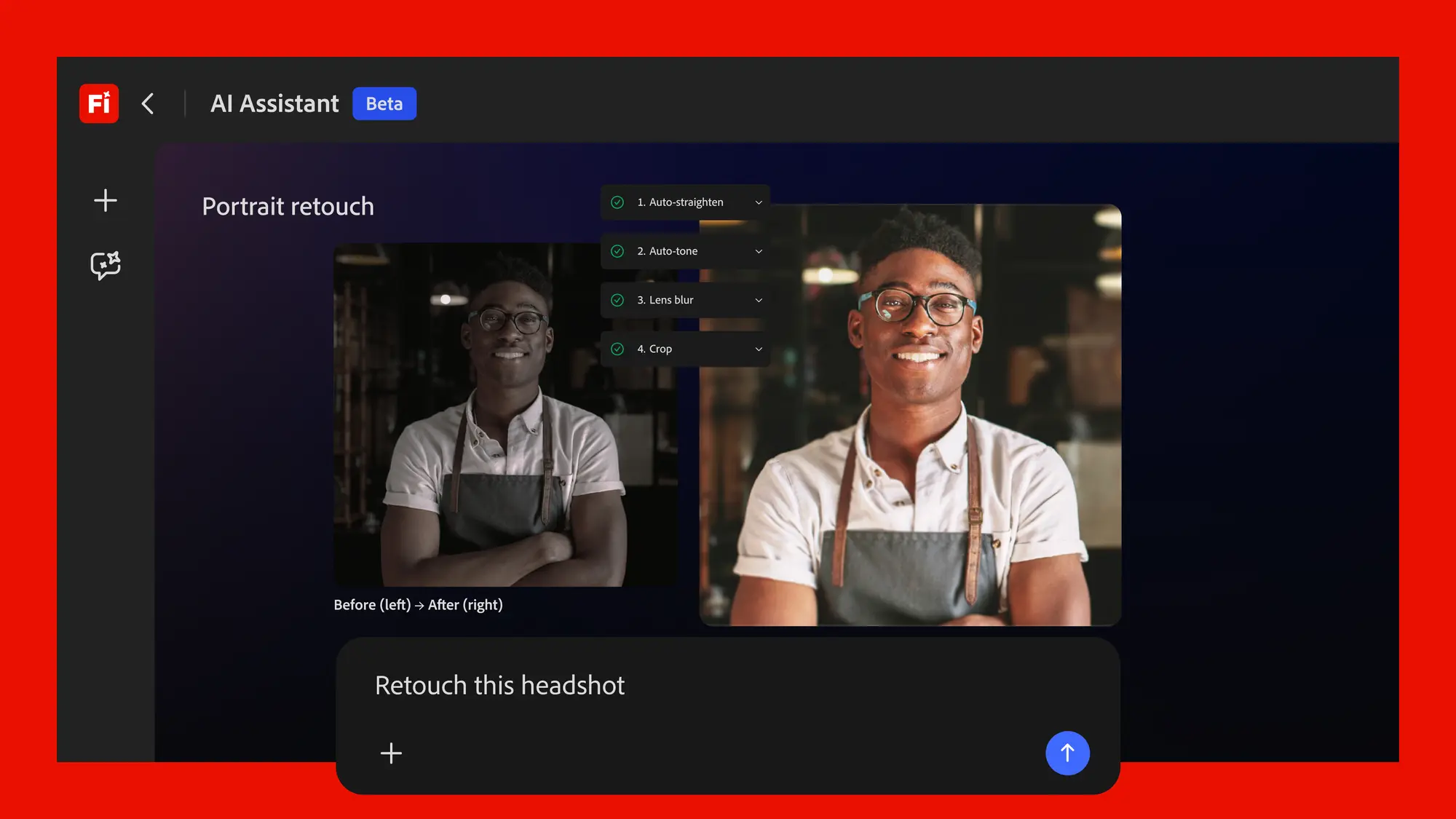
Firefly AI Assistant brings the power and precision of Adobe’s creative apps into a single, unified conversational interface.
Creative work has always meant working through steps. You start with a vision of what you want to create, but getting there means navigating tools, managing workflows, and building things piece by piece, pixel by pixel. The more complex the outcome, the more time you spend figuring out how to make it happen. That’s been the tradeoff: control and precision, but often at the cost of more time, more complexity, and work spread across multiple tools.

Leave a Reply